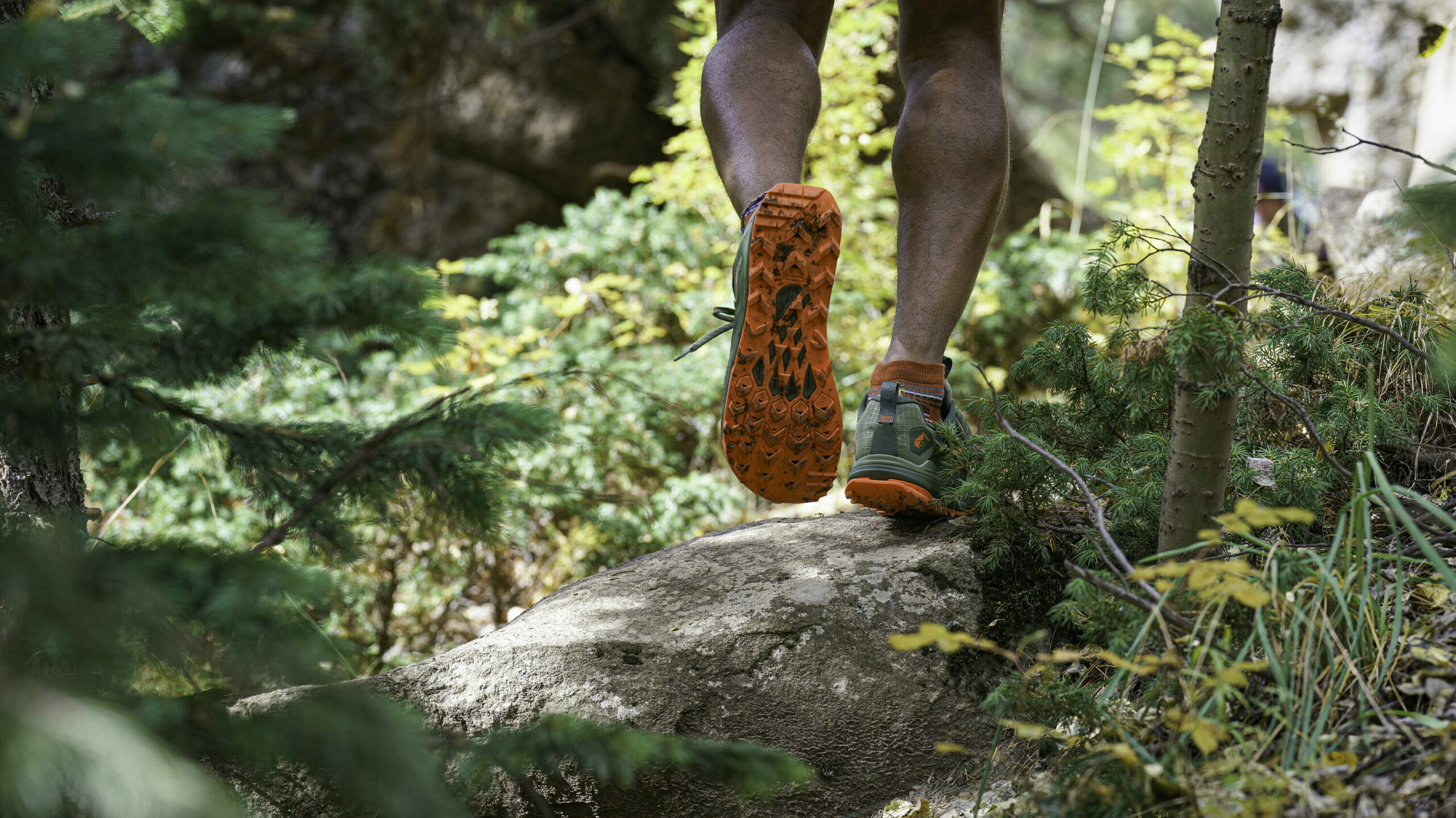
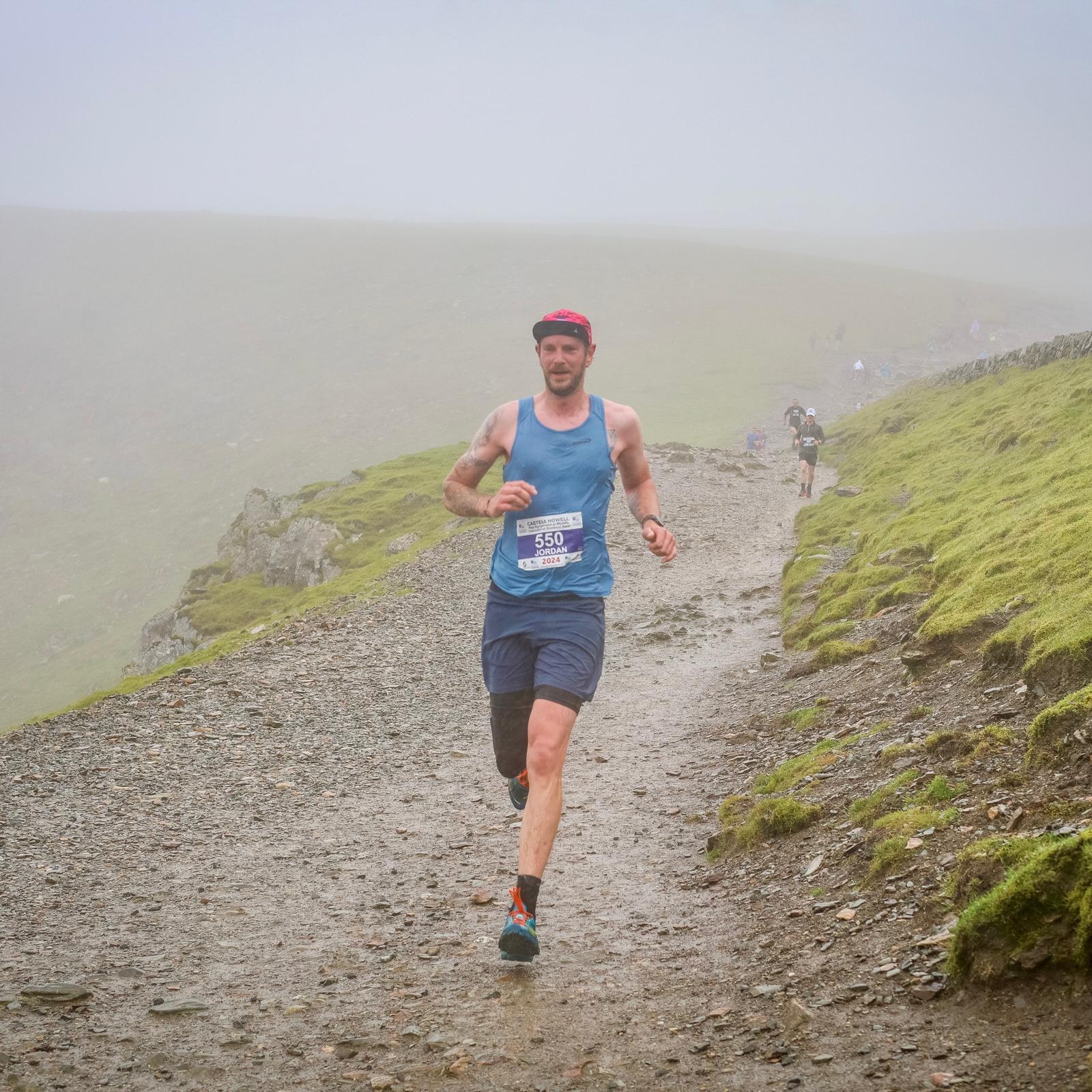
Trail running shoes are not a substitute for hiking boots, Trail running shoes are lighter, more flexible and designed to move with your foot at speed off road. They don’t offer the same ankle support as a Hiking Boot, which matters more when you’re carrying a heavy pack or moving slowly across technical ground. If you’re not certain which you need or if you wish to find out Are Hiking Boots Essential for Yr Wyddfa (Snowdon) Guide.
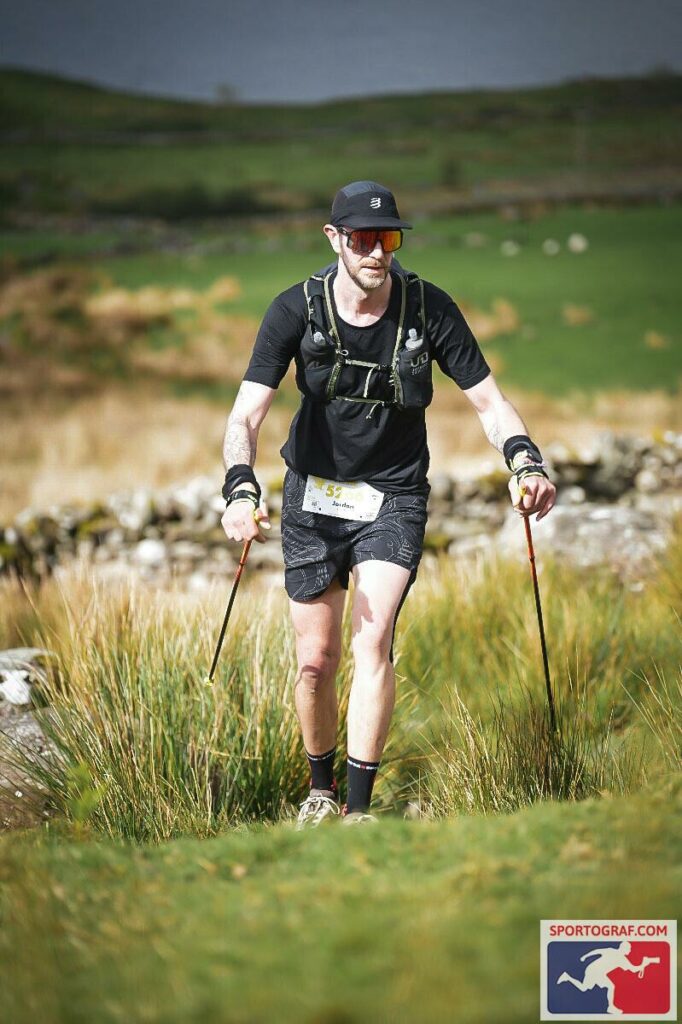
Updated June 2026 by Jordan – Mountain Leader, Road Run Leader (ML, LIRF & FMR) & competitive UTS trail runner part of the Crib Goch Outdoor Team.
Why footwear matters on Eryri trails
A single route in Eryri can take you across slippery slate, boggy moorland, steep rocky scrambles and hard-packed descents within a few miles of each other. Wearing inappropriate footwear can lead to an uncomfortable day out, increases your risk of injury or could just wear out far too quickly becoming an expensive mistake.
The right trail running shoe helps you stay upright, moving efficiently and enjoying your time in the mountains. Whether that’s running a local fell race or training for something bigger like the Ultra Trail Snowdonia, or just running in the mountains for fun, footwear matters.
The questions we ask every customer in-store
To be able to recommend the best trail running shoe, we ask each customer two crucial questions.
Question 1: What kind of terrain do you plan to run on?
Technical terrain like sky races, rocky ridge lines and serious mountain routes needs more underfoot protection, a more aggressive outsole and better ground feel. A relatively flat trail or mixed gravel and road run needs far less. Most people run somewhere in between which is why Gravel Running Shoes are becoming more popular.
Question 2: What sort of distance do you tend to cover?
For longer runs like Ultra Trail Runs and Trail Marathons, cushioning matters more. Tired legs hit the ground harder and softer, more protective foam reduces the cumulative impact. For shorter, faster runs we find a lower-profile and more responsive shoe works better, giving more ground feel and more agility.
Once you’ve answered those, fit becomes the final filter..
What to look for: Trail Running Shoe Anatomy Explained
| Part | What it does | What it means here |
|---|---|---|
| Toe box | The front of the upper where your toes splay | Look for room to move. Feet swell on long runs, and tight toe boxes cause black toenails on descents. But you don’t want any side to side movement |
| Heel-to-toe drop | Height difference in mm between heel and forefoot | Lower drops (0-5mm) encourage a flatter foot strike. If you’re used to road shoes, transition gradually |
| Stack height | How much foam sits underfoot | More stack means more cushioning and protection, but less ground feel |
| Lugs | Rubber studs on the outsole | 4-6mm is the sweet spot for Eryri: deep enough for mud, short enough to grip slate |
| Midsole foam | The cushion and energy return | Modern supercritical foams (nitrogen-infused EVA, PEBA blends) are lighter and more durable than older EVA |
| Rocker geometry | Upward curve at toe and heel | Helps roll through the stride, particularly useful on long descents when legs are tired |
| Upper material | The part wrapping around your foot | Breathable mesh drains and dries faster than waterproof membranes in most Eryri conditions |
What I know suits Eryri terrain
- Grip that mixes bite and stickiness like the Graphene-infused rubber or Vibram Megagrip compound excels on wet slate and rock, which you will encounter on almost every route here.
- A secure midfoot hold with room in the toe box, for your feet to stay on the midsole on cambers and technical ground without your toes being crushed on the descent.
- A rock plate or dense midsole is welcome on technical terrain, but the shoe should still flex on off-camber ground rather than feel like a brick
Needing Waterproof Trail Running Shoes: The most common misconception we deal with in store. If you’re wearing shorts and running in Welsh rain, your shoe will fill with water over the ankle regardless of any membrane, and then struggle to drain because the waterproof lining traps it inside. A breathable mesh shoe dries faster. A better solution is a waterproof sock paired with a non-waterproof running shoe. We’ve written about this in detail: Should I get waterproof running shoes?
How our brands approach shoe design
Understanding the core philosophy behind each brand helps us narrow the choice before you try anything on. We cherry pick from each brand, shoes that satisfy a specific need and footshape so we’re confident that we’ve something for everyone in-store.
Merrell makes hard-wearing, versatile trail shoes that suit a wide foot shape and make the most of your budget. The Agility Peak and Moab Speed have sold in the millions because they’re reliable all-rounders that hold up on real-world terrain. The Agility Peak in particular suits Eryri terrain with a deep lug, rock plate and solid support for the kind of mixed ground with technical sections that we run on here. The Long Sky sits at the far end of the Merrell spectrum: a skyrunning and mountain racing shoe with less cushioning and more ground feel for the most technical terrain like our namesake Crib Goch. Money goes further with Merrell than most brands.
Hoka built its reputation on high cushioning and rocker geometry with the Challenger series being our most popular shoe year after year. It’s great on roads as well as capable on gravel and mild trails, only struggling and finding its limits on technical rocky ground. If you start and finish your runs from your doorstep in Eryri, mixing road and trail then the Challenger is exactly what you need and the best place to start Trail or Gravel Running.. The Speedgoat picks up where the Challenger lets off, it’s Hoka’s serious mountain shoe, with a more aggressive outsole and better suits sustained technical terrain.
Topo is gaining ground fast, focusing on natural foot movement with a wider, foot-shaped toe box, similar in philosophy to Altra and Inov8. If you have wider feet or are moving away from the narrow lasts common in road shoes then Topo Vista are worth trying early in your Trail Running Shoe search or the Ultraventure 4 is a very comfortable long-distance option for more gravel like terrain.
Altra designs all Trail Running Shoes around a zero-drop platform and a wide FootShape toe box with the Lone Peak 9 being their best-known trail shoe. The Olympus 275 (see picks below) is their most protective option, also our widest option, and a serious mountain shoe best suited for those longer days on demanding terrain.
NNormal Co-founded by Kilian Jornet, the brand builds shoes designed specifically for the kind of mountain running Kilian does: long, technical, high-mileage efforts. The Tomir 2 is the one I reach for year-round in Eryri, if I could only pick one shoe this would be it. The more you get into trail running the more you’ll hear about Kilian.
Inov8 was born on British fells and it shows, boasting aggressive grip, durable construction and low-profile builds for technical and muddy ground. The Mudtalon Speed is still the go-to for races on soft, wet and technical terrain. It’s the one to beat on this type of terrain.
Salomon covers a lot of ground, they’re one of the bigger brands in our line up. The Aero Blaze GRVL is an emerging favourite for newer trail runners, taking on the challenger for most popular gravel shoe. Sitting comfortably between mountain trail and road, much like a gravel bike sits between road and mountain bike. The Ultra Glide offers impressive cushioning but is less capable on serious technical terrain.
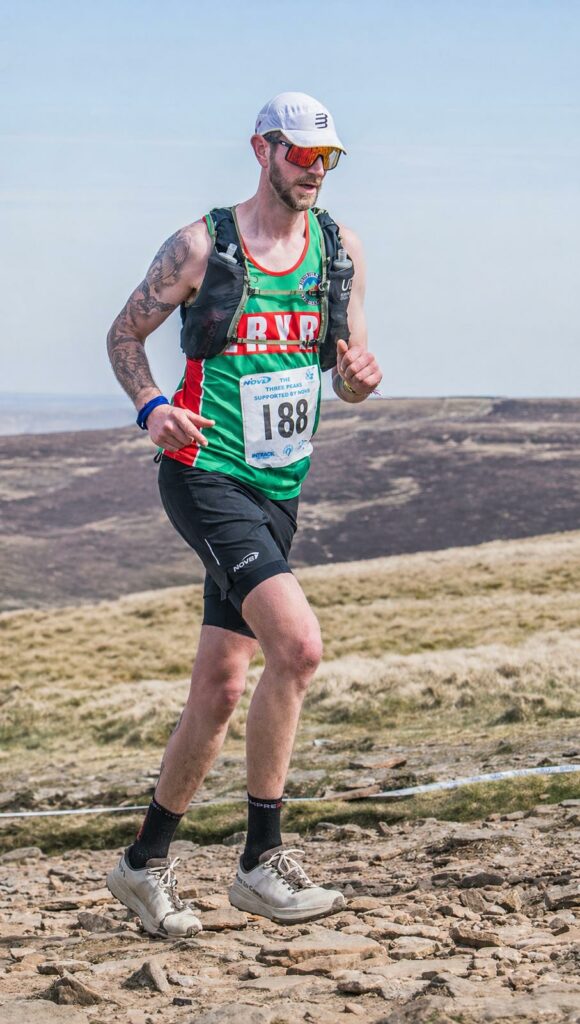
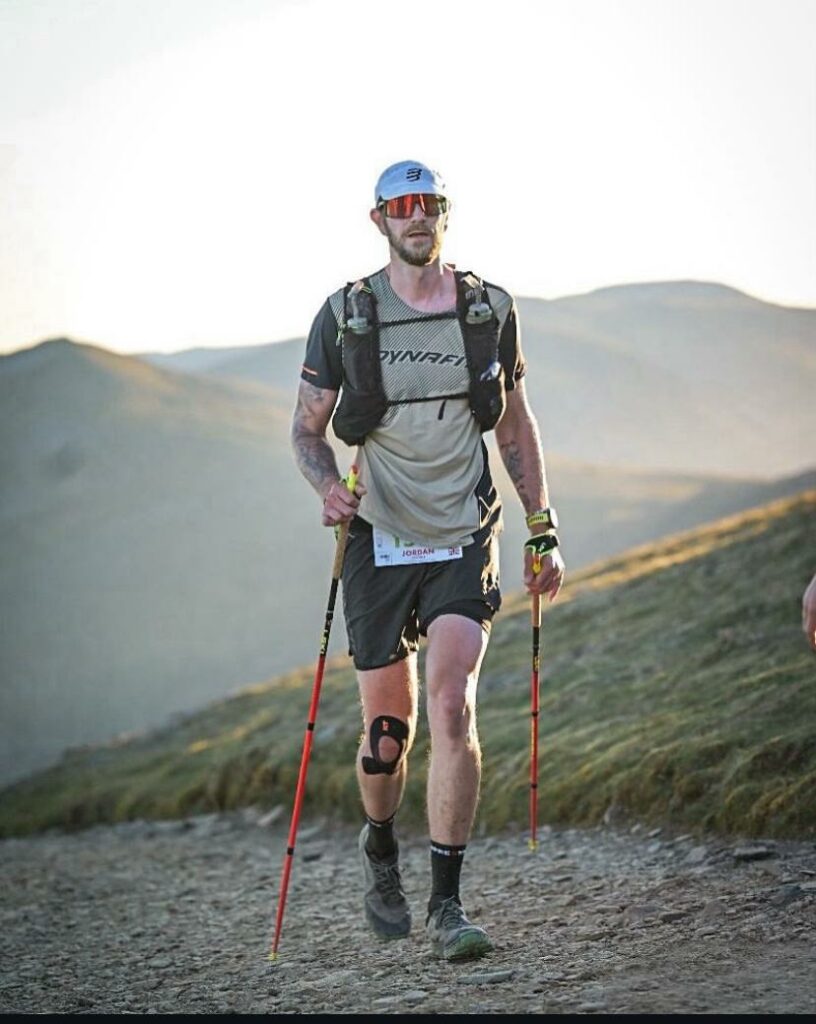
2026 Trail Running Shoe Staff Picks
The tech specs are summarised below for easy comparison
For everyday training and first trail shoes
Hoka Challenger 8
Our most popular shoe. The Challenger runs comfortably from tarmac through gravel to a mild trail without wanting to change shoes. It’s not the best at any one thing, and that’s exactly the point. If you’re figuring out what kind of trail running you enjoy, or you start your runs from your front door and don’t know what surface you’ll end up on, start here. Our team in Llanberis also reach for these at work or newer staff getting into trail running. Easy to live in, easy to run in.
Salomon Aero Blaze GRVL
The gravel running shoe is an emerging category growing quickly in popularity. The GRVL is faster and more responsive than a trail shoe, it’s much more capable off-road than a road shoe. Think of it the way you’d think of a gravel bike, it does both without being fully committed to either. A good choice for newer runners building from road into mixed terrain, park runs in the summer or anyone whose running mixes Eryri lanes with trail sections.
For mixed trail and moderate technical terrain
Merrell Agility Peak 5
Our most suitable trail running shoe for the mixed terrain that makes up most running in Eryri. The deeper lug handles mud and wet grass that the Challenger won’t, and the rock plate adds meaningful protection without making the shoe stiff. The Agility Peak suits a slightly wider foot shape, holds up well over time and represents good value relative to what you get. If you run the local fell race circuit or are looking for a durable trail running shoe then the Merrell Agility Peak is a solid choice and one many runners choose as a daily trainer.
Topo Ultraventure 4
Topo is becoming increasingly popular with our customers and the Ultraventure 4 is the reason why. It’s a comfortable, long-distance trail shoe with a natural foot shape and a wider toe box that suits runners who find standard lasts cramped. It suits the less technical terrain and is ideally suited for people looking to get into Trail Running. The Topo Ultraventure 4 comes complete with Vibram grip and is plush enough for clocking up the miles, focusing more on comfort rather than a competitive edge. If you have wider feet and want a daily trainer that keeps you comfortable through long efforts, I’d recommend the Topo Ultraventure.
For long days and mountain ultras
NNormal Tomir 2
If I had to choose one shoe for trail running in Eryri year-round, this would be it. The Nnormal Tomir 2 handles road, gravel, trail and even technical mountain terrain without serious compromise. The Vibram Megagrip Litebase outsole with 5mm lugs grips wet rock as well as anything we stock. The supercritical EExpure midsole foam is nitrogen-sealed, which means it resists water and debris ingress holding its ride quality over time. The Tomir 2 is also one of the more resoleable shoes on the market, and at roughly half the cost of a new pair, it’s a wise purchase for anyone putting in serious mileage on the abrasive Eryri terrain.
Fit note: I find the Tomir 2 runs with a snugger feel than the original Tomir. If you have a higher-volume or wider foot, try a half size up.
Altra Olympus 275
This is the widest shoe we currently stock, if you know to have wide feet then it is worth bearing in mind. The Olympus 275 is built on Altra’s Original FootShape last, their broadest fit, and uses a MATRYX one-piece woven upper with Kevlar reinforcement for serious durability on mountain terrain. The integrated scree sleeve keeps debris out, so you don’t have to stop or suffer the irritation during a race. Featuring zero drop with a 33mm stack and Vibram Megagrip underfoot, the Olympus 275 is a shoe for runners who need maximum foot width and high protection for long mountain days.
Fit note: suits high-volume and wide feet particularly well. If you feel pressure on the outer toes or forefoot in your current shoes then this is a sign that you may need a wider shoe.
Hoka Speedgoat 7
The Speedgoat set the standard for cushioned mountain trail running, improved upon with an updated outsole rubber and refined fit in the latest version. If the Challenger is Hoka’s Swiss army knife, the Speedgoat is the mountain GOAT of trail running shoes with better grip and protection necessary for sustained technical terrain. The Speedgoat 7 is my choice for ultra-distance mountain events where comfort across high mileage matters more than ground feel or pace. Many of our customers start out in the Challenger and move onto the Speedgoat when they catch the Trail Running bug and want to complete their first UTS.
For technical terrain and racing
Merrell MTL Long Sky
The Long Sky is Merrell’s mountain racing shoe, built for technical terrain at pace rather than comfortable long-distance cruising. It has the same confidence-inspiring grip as the Agility Peak on wet rock and slate, but with a lower and more responsive platform that provides better feel for the ground on serious technical lines. We’re talking about a shoe for people that run over ridgelines like Crib Goch! So if you’re moving into sky races or want a shoe for the most demanding Eryri ridge running, this is the Merrell to look at.
Inov8 Mudtalon Speed.
The Mudtalon Speed is laser focused on running in soft, wet and technical terrain. Think boggy fell races, orienteering, grass-based races where you need maximum bite in conditions that would clog any other trail shoe. It’s quite a niche calling but it really answers when called upon, I use these for mud and grass racing only. They’re not a daily trainer but if you’re racing on soft ground, nothing grips better that the Inov8 Mudtalon Speed
Mount to Coast T1
This is my trail shoe of choice when budget is no object and I am running a stable of trail running shoes. The T1 is Mount to Coast’s first trail shoe and it’s already earning a serious and justified reputation among ultra runners. The Vibram Megagrip Litebase outsole with Traction Lug micro-features gives it exceptional grip on technical ground equally well in dry, wet, loose and hard-packed conditions. The Kevlar-reinforced upper is built to last and the LightCELL supercritical PEBA-hybrid midsole is responsive and tough. The dual-zone TunedFit lacing system takes a run or two to dial in, but having independent control of forefoot and midfoot fit if one of those luxuries you can never turn back from, it really matters on long descents when my feet swell.
Worth noting: the T1 is less capable in deep mud or very soft ground, where lugs can clog. This is why I pair it with the Mudtalon Speed for racing on grass and soft ground..
Sizing note: the T1 fits slightly longer than Hoka and Inov8. If you typically buy Hoka, you may want to go half a size down.
| Shoe | Stack (heel/fore) | Drop | Lug depth | Weight – Men’s | Weight – Women’s | Midsole (foam) | Outsole |
|---|---|---|---|---|---|---|---|
| Hoka Challenger 8 | 42 / 34 mm (M); 38 / 30 mm (W) | 8 mm | 4 mm | ~9.3 oz / 264 g (US9) | 7.67 oz / ~218 g (W8) | CMEVA (compression-molded EVA) | Hoka Durabrasion rubber (not Vibram) |
| Salomon Aero Blaze 3 GRVL | 40 / 32 mm | 8 mm | 2.5 mm | 8.7 oz / 247 g (US9) | 7.2 oz / ~204 g (W8) | Energy Foam Evo / optiFOAM² (supercritical TPU) | Gravel ContaGrip |
| Merrell Agility Peak 5 | 31 / 25 mm | 6 mm | 5 mm | 10.23 oz / 290 g | 8.29 oz / 235 g | FloatPro foam (+ rock plate) | Vibram Megagrip |
| Topo Ultraventure 4 | 35 / 30 mm | 5 mm | ~3.2 mm (measured) | 10.4 oz / ~295 g (M9) | 8.2 oz / ~232 g (W7) | ZipFoam (EVA-based) | Vibram XS Trek EVO |
| NNormal Tomir 2 | 33 / 25 mm | 8 mm | 5 mm | 264 g / ~9.3 oz (UK 8.5, unisex) | 264 g / ~9.3 oz (unisex sizing) | EExpure (supercritical) | Vibram Megagrip + Litebase + Traction Lug |
| Altra Olympus 275 | 33 / 33 mm | 0 mm | ~3.5 mm (some list 4 mm) | ~11.1 oz / 314 g (US9) | 9.7 oz / 273.6 g (W8.5) | Compression-molded EVA | Vibram Megagrip |
| Hoka Speedgoat 7 | 37 / 32 mm | 5 mm | 5 mm | ~9.1 oz / 257 g (US9) | ~8.4 oz / 238 g | Supercritical EVA (SCF) | Vibram Megagrip |
| Merrell MTL Long Sky 2 | 23.5 / 19.5 mm | 4 mm | 5 mm | 8.29 oz / 235 g | 6.88 oz / 195 g | FloatPro foam | Vibram Megagrip |
| Inov8 Mudtalon Speed | 26 / 22 mm | 4 mm | 8 mm | ~248 g / 8.75 oz (US9 Precision) | not split by gender | Powerflow Pro (+ rock plate) | STICKYGRIP rubber |
| Mount to Coast T1 | 36 / 32 mm | 4 mm | ~3.5–4 mm | 9 oz / 255 g (M9) | not separately published | LightCELL (supercritical PEBA-hybrid) | Vibram Megagrip + Litebase + Traction Lug |
My full shoe rotation (if budget were no object)
I am a competitive UTS trail runner and I’m fortunate to have a stable of shoes for different races and conditions. For reference I have a regular foot shape.
Here’s a couple tables of what I would choose for each surface:
If there was not budget:
| Surface | Shoe |
|---|---|
| Road / ultra road | Mount to Coast H1: maximum cushion for road ultra distances |
| Gravel / hybrid | Salomon Aero Blaze GRVL. |
| Trail | Mount to Coast T1 |
| Mud / grass racing | Inov8 Mudtalon Speed or NNormal Kjerag |
But if budget were an object
| One shoe for all of Eryri, year-round | NNormal Tomir 2 |
| Summer trail bonus pair! | Mount to Coast T1 |
These are my preferences, you might find that your footshape, the distances you enjoy and whether or not you get into competitive running could dictate a different shoe for your specific requirements. There’s a lot of variables to consider, just know there’s a shoe out there that will feel comfortable and give you confidence to run for miles over almost any terrain.
Don’t forget socks!
The right shoe can be let down by poor sock choice, which sounds unbelievable but it’s true. For starters you should avoid cotton entirely, it holds moisture and causes blisters. Instead go for a technical synthetic blend or merino wool.
I prefer a seamless toe box, snug ankle cuff and targeted padding. This can reduce the friction that creates hotspots on long runs.
For longer runs I reach for compression socks like the Compressport Pro Racing v4.0 Trail that can improve circulation and reduce post-run fatigue. Learn more about Compressport here
Staff picks:
- Compressport Pro Racing v4.0 Trail
- My first choice.
- Injinji Trail Midweight Crew
- Particularly good for preventing blisters between toes.
- Darn Tough Run No Show Tab Ultra-Lightweight with Cushion
- Merino blend and targeted cushioning
Fine-tune with insoles
Changing the factory fitted insoles can make a big difference since they are designed to suit the largest number of people, often by being really flat offering little to no are support. Brands like Sidas and Superfeet offer arch support, heel stability and volume adjustments that can transform the fit of an otherwise great shoe. Insoles are especially worth considering for runners with high arches, flat feet, or recurring hotspots. Needing to adjust a shoe fit with an insole is quite normal, it’s not a sign that you bought the wrong shoe size.
Our team in Llanberis can help you find and fit the right insole using foot measurement tools in store, using a pressure pad. It’s a quick and easy process, one that we’ve all done and most of us have discovered the need to change the factory fitted insoles for one with different arch support.
How long should trail running shoes last?
I wish I could say a number, especially because I get asked this alot but it really depends on too many variables to give one number. But as an approximate guide, I find that most of our trail running shoes last between 300 and 500 miles (480 to 800km). It’s worth bearing in mind that Eryri’s terrain is going to wear shoes out faster than Bush Park parkrun, we’re running on sharp slate, granite rock, through bogs and streams… We love it but we’re asking a lot from our shoes.
Here’s some signs to look out for so you know when it’s time to replace your shoes:
- Grip on the outsole has visibly flattened
- If it looks like an F1 Soft then it’s really done!
- The midsole feels dead underfoot, no rebound and just compression
- No spring in your step!
- The upper is breaking down or tearing
- Visible signs of failure
Two things worth knowing: the NNormal Tomir 2 can be resoled for roughly half the price of a new pair, which makes it significantly more economical for high-mileage runners.
The Hoka Challenger and Salomon GRVL are also popular with people who run in them daily or are on their feet at work all day. We’ve found that they hold up really well to mixed use.
Common mistakes
Buying your road shoe length. Shoe size is only one dimension worth considering, shoe width and volume is now being catered for more than ever. Don’t be surprised if you have to go half a size up for a trail running shoe, your asking you feet to be more dynamic over rough terrain. You toes will thank you especially when running downhill on a long run. If you can, we recommend trying shoes on in store with our experienced trail runners.
Assuming you need waterproof shoes. You almost certainly don’t. Read the full explanation in our waterproof running shoes guide. The short version: mesh drains, membranes don’t and water always gets in when you’re wearing shorts and running in the rain.
Testing in thin socks then racing in thick ones. This almost goes without saying but we see a lot of customers coming in wearing their regular day to day cotton socks when buying new shoes. We always ask you to try shoes on in the socks you intend to run in. Trail Running Socks often feature padding that would alter the fit and feel.
Going straight into long technical runs in new shoes. Give your body time to adapt, especially with lower drop or zero drop shoes. Many people have learnt this lesson the hard way.
Transition guide for new trail runners
If you’re moving from road running to trai runningl or switching to a lower drop shoe, give your body time to adapt. I know many people that haven’t and gone on to regret it, couch to 5k back to couch! Trust me it is especially important that you give your calves and the Achilles time to adapt. Here’s a rough guide if you already run in road shoes.
| Week | Surface mix | Focus |
|---|---|---|
| 1 to 2 | 80% road / 20% easy trail | Short 30-minute runs. Let calves adapt if drop is lower than you’re used to |
| 3 to 4 | 60% trail / 40% road | Add gentle descents. Practise lacing on different terrain |
| 5 onwards | 80 to 100% mixed trail | Introduce longer technical routes. Add poles if racing |
Come and try them some on
As I’ve said before: no two runners are the same. What works for me on a UTS course might not work for someone heading out on Moel Eilio for the first time. The right shoe depends on your foot shape, your stride, your distance, your frequency and the trails you run. That’s why we ask you questions when you visit us in store. Our goal is to help find the Trail Running Shoe that you’ll enjoy running in the most.
If possible drop into our Llanberis Shop, ask for me Jordan or my colleagues Nathan & Jude who are also competitive trail runners. We have a test ramp, a full range of insoles and socks to try alongside the shoes. Try shoes on properly before stepping outside, replicate your race kit and leave knowing you’ve got the right pair. Also keep an eye on our socials for one of our free demo evenings where you can join us for an easy run.
Browse all trail running shoes
Cross-links: Snowdon footwear guide · Waterproof running shoes guide · Running socks · Snowdon FAQs